
Category: Cutting Tool Guides
Sandvik, Iscar, and Seco High-Speed Milling Inserts for Aerospace Aluminum 7075-T6: Selection Guide
Why 7075-T6 Aluminum Demands Specialized HSM Tooling 7075-T6 is the dominant aerospace structural aluminum, prized for a strength-to-weight ratio that rivals mild steel. But its combination of low hardness, high thermal conductivity, and a strong tendency toward built-up edge (BUE) makes it unforgiving for tooling that is not engineered for the ISO N (non-ferrous) material …
Walter vs Mitsubishi Carbide Milling Inserts for Titanium Alloy (Ti-6Al-4V) Face Milling Compared
Introduction: Why Titanium Alloy Machining Demands Specialized Inserts Titanium alloys, particularly Ti-6Al-4V (Grade 5), remain among the most challenging materials in modern machining. With a tensile strength of 950–1000 MPa, low thermal conductivity (6.7 W/m·K), and high chemical reactivity at elevated temperatures, Ti-6Al-4V causes rapid tool wear through diffusion, adhesion, and notch wear mechanisms. Selecting …
High-Silicon Aluminum Alloy Milling Cutter Selection Guide: Sandvik vs Seco Insert Grades for Hypereutectic Al-Si Machining
Introduction to High-Silicon Aluminum Alloy Machining High-silicon aluminum alloys, particularly hypereutectic Al-Si alloys with silicon content ranging from 12% to over 20%, present one of the most demanding challenges in modern CNC machining. These alloys — widely used in automotive engine blocks, cylinder heads, pistons, and compressor housings — combine the lightweight advantage of aluminum …
Hardened Steel Hard Turning Tool Selection Guide: CBN and Ceramic Insert Recommendations for HRC 55-65
Introduction to Hard Turning of Hardened Steel Hard turning replaces cylindrical grinding for finishing hardened steel components in the 55 to 65 HRC range, delivering shorter cycle times, greater flexibility, and comparable surface integrity when the process is controlled correctly. The technology is widely applied in automotive gearing, bearing races, hydraulic valves, and transmission shafts …
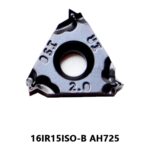
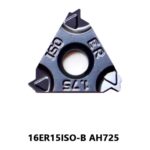
Iscar vs Vargus Threading Inserts Compared: ISO Metric Thread Turning Performance and Grade Selection
Introduction: Why Threading Insert Selection Matters Thread turning is one of the most demanding metal cutting operations. Unlike conventional turning, the insert follows a helical path with a continuously varying depth of cut, and the cutting edge must form a precise profile while managing chip evacuation across a narrow groove. For CNC machine shops producing …
Mitsubishi vs Kyocera Solid Carbide End Mills Compared: Titanium Alloy Ti-6Al-4V Finishing Performance Analysis
Titanium alloy Ti-6Al-4V (Grade 5) remains one of the most challenging materials in CNC machining. Its low thermal conductivity, high chemical reactivity, and tendency to cause chattering at the tool flutes demand specialized cutting tools and carefully optimized parameters. Among the leading carbide end mill manufacturers, Mitsubishi Materials and Kyocera have both developed proprietary carbide …
Stainless Steel Turning Insert Selection Guide: Grade and Geometry Recommendations for Austenitic and Duplex Grades
Stainless steel turning presents unique challenges that demand careful insert selection. The material’s high work-hardening rate, tendency to build up edge (BUE), and poor thermal conductivity place enormous stress on cutting edges. Selecting the wrong insert grade or chipbreaker geometry can result in catastrophic tool failure, poor surface finish, and dimensional instability. This guide provides …
Sandvik vs Iscar High-Feed Milling Cutters Compared: Hardened Steel Die Machining Performance
Introduction: The High-Feed Milling Revolution in Die and Mold Manufacturing High-feed milling (HFM) has transformed how manufacturers approach roughing operations in hardened steel die and mold applications. By combining shallow axial depths of cut (ap) with high feed per tooth (fz), this strategy generates thin chips that efficiently dissipate heat, allowing significantly higher cutting speeds …