

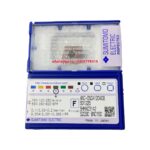
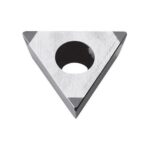
Korloy Turning Grade Technology Explained: NC9025 CVD vs PC5300 and PC9030 PVD Coatings, Architecture and Cutting Parameters
Insert grade selection is often reduced to a single question: which box is cheapest? In practice, the coating system on a turning insert decides whether an edge survives 12 minutes or 30 minutes in the cut, and it dictates the cutting data you can actually run. Korloy’s turning portfolio, built around NC-series CVD grades and …
Aerospace Aluminum High-Speed Milling Tool Selection Guide: Polished Carbide, PCD End Mills and Cutting Parameters for 6061/7075 Explained
Aluminum alloys are the backbone of aerospace structural components, and 6061-T6 and 7075-T6 remain the two most machined grades in the industry. While aluminum is often described as an easy-to-cut material, achieving high material removal rates (MRR), flawless surface finish, and long tool life in production requires a disciplined tool-selection strategy. This guide walks through …
Face Milling Steel Compared: Sandvik GC4240 vs Kyocera PR1225 Insert Grades, Geometry and Cutting Parameters
Face milling is the most common milling operation in machine shops working with ISO P steels, and it is also where insert grade selection has the most direct impact on productivity and tool life. Two of the most widely specified grades in this segment are Sandvik GC4240 and Kyocera PR1225. Both are CVD-coated carbide grades …
Hardened Steel Turning Best Practices: Insert Grades, Cutting Parameters, and Rigidity Tips for 45-65 HRC Workpieces
Why Hardened Steel Turning Demands a Different Approach Turning steel in the 45–65 HRC range is one of the most demanding operations in metalcutting. Unlike soft steel machining, where material flows cleanly across the rake face, hardened steel generates intense cutting forces, high localized temperatures, and rapid abrasive wear on the insert edge. A single …
Hardened Steel Turning Best Practices: Insert Grades, Cutting Parameters, and Rigidity Tips for 45-65 HRC Workpieces
Why Hardened Steel Turning Demands a Different Approach Turning steel in the 45–65 HRC range is one of the most demanding operations in metalcutting. Unlike soft steel machining, where material flows cleanly across the rake face, hardened steel generates intense cutting forces, high localized temperatures, and rapid abrasive wear on the insert edge. A single …
Inconel 718 Turning Insert Selection Guide: Sandvik vs Iscar Grades, Chipbreaker Geometry and Cutting Parameters Compared
Inconel 718 is the workhorse nickel-based superalloy of the aerospace, gas turbine and energy industries, and it is also one of the most punishing materials a cutting tool can face. Heat, work hardening and an abrasive microstructure combine to destroy ordinary carbide grades within minutes. Choosing the right turning insert — the correct substrate, coating …
Walter Tiger·tec Silver Turning Grades Explained: CVD Coating Architecture, Grade Selection, and Cutting Parameters for Steel and Stainless Steel
Among CVD-coated carbide families for turning, few have achieved the catalogue longevity and shop-floor familiarity of Walter’s Tiger·tec Silver generation. Introduced as the successor to the original Tiger·tec grades, the Silver programme reorganised Walter’s turning assortment around a smaller set of universal grades, each covering a wide slice of the ISO application map. The result …
Stainless Steel Threading Best Practices: Vargus vs Carmex Insert Grades, Infeed Strategy and Cutting Parameters Explained
Threading is one of the few machining operations where the tool has almost no room for error. The thread flank is the functional surface — it seals, it clamps, it transmits load — and a torn or work-hardened flank cannot be polished back into tolerance. In stainless steel, every failure mode that threading is prone …
Carbide Insert Cutting Parameters Reference Guide: Starting Values for ISO P, M, K, N, S, H Material Groups
Why Starting Values Matter More Than Perfect Values Most machining productivity is won or lost at the parameter-setting stage. A carbide insert running 20% below its ideal cutting speed will frequently deliver three to four times less tool life per edge, while the same insert pushed 20% too fast can collapse within minutes through plastic …
Aluminum High-Speed Milling End Mill Selection Guide: YG-1 vs OSG Geometry, Coatings, and Cutting Parameters for 6061-T6 and 7075-T6
Why Aluminum Milling Deserves Its Own Tooling Strategy Aluminum alloys such as 6061-T6 and 7075-T6 can be milled at spindle speeds three to five times higher than steel, yet many shops still ruin parts — and end mills — by applying steel-machining logic to non-ferrous work. The failure modes are distinctive: built-up edge (BUE), chip …