
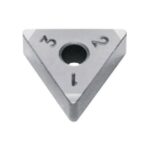



The cutting insert and the spindle get most of the attention in a CNC machining cell, but the component that actually decides how long that insert lasts is the one sitting between them: the toolholder. A cheap, worn, or poorly matched toolholder will destroy runout, transmit chatter into the cut, and pull a solid carbide end mill out of the shank mid-pass. Choose the right holder, and the same insert can deliver 30–50% more edges, better surface finish, and higher metal-removal rates without changing a single cutting parameter.
This guide walks through the six toolholder families you will find on a modern machining center — ER collet, hydraulic, shrink-fit, Weldon side-lock, milling/power chucks, and mechanical precision chucks — and compares them on the metrics that actually affect the cut: total indicated runout (TIR), balance class, pull-out torque, concentricity repeatability, coolant-through capability, and cost. A worked example for a ∅12 mm solid carbide end mill finishes the article so you can map the theory directly to a spindle decision.
1. Why the Toolholder Decides Tool Life
Three physical quantities govern what happens at the cutting edge, and all three are set by the toolholder:
- Runout (TIR). Every micrometre of additional runout is shared unequally across the insert edges. With 10 µm of extra TIR on a four-flute end mill, one flute can carry 30–40% more load than the others, which is why field trials consistently show a 30–50% drop in tool life when runout climbs from 5 µm to 15 µm at 3×D overhang.
- Pull-out / clamping force. End mills and drills are pulled axially into the cut. If friction cannot hold the shank, the tool creeps forward, depth of cut increases, and the flute stalls or snaps. Positive-drive (Weldon flat) holders eliminate this entirely; friction holders need a minimum interference and clean shank.
- Balance. An unbalanced assembly at 20,000 rpm generates a centrifugal force that scales with the square of speed. A G6.3 holder that is acceptable at 8,000 rpm produces a measurable dynamic load at 24,000 rpm, exciting the tool and degrading finish.
Before comparing families, it helps to have the yardsticks in one place.
Reference: How Runout, Balance and Speed Relate
| Property | Typical range | Rule of thumb |
|---|---|---|
| TIR at 3×D overhang | 2–20 µm | Below 5 µm = premium finish/long life; above 10 µm = roughing only |
| ISO 1940-1 balance class | G6.3 / G2.5 / G1.0 | G6.3 up to ~12,000 rpm; G2.5 above 15,000 rpm; G1.0 above 25,000 rpm |
| Permissible residual unbalance | e = 9549 × G / n µm | G2.5 at 20,000 rpm ≈ 1.2 µm; at 30,000 rpm ≈ 0.8 µm |
| Pull-out torque (∅12 mm shank) | 40–140 N·m | Positive-lock (Weldon) is effectively unlimited within shank strength |
| Concentricity repeatability | 2–10 µm | Needed for consistent part tolerances on swapped tools |
2. The Six Toolholder Families
2.1 ER Collet Chucks
The ER collet chuck is the workshop default because it is flexible: one body accepts collets from ER11 to ER50, covering shanks from roughly 1 mm to 34 mm. The collet collapses 1 mm across its nominal range, so a single ER32 set holds 3–20 mm tools.
Runout on a new, correctly seated ER collet is typically 8–15 µm at 3×D, but this degrades fast: a dirty collet seat, an over-torqued clamping nut, or a worn collet can push TIR above 20 µm. ER collets are available in standard (≤0.10 mm eccentricity) and precision (≤0.005 mm, often marked AA or ER-P) grades; the precision grade is the difference between acceptable and good.
Use ER collets for general milling, drilling, reaming, and tapping where the RPM stays under ~25,000 and pull-out is moderate. For roughing with high axial engagement, add a ER collet with a coolant-through end plug or move to a stronger design.
2.2 Hydraulic Chucks
A hydraulic chuck expands a thin inner sleeve with pressurized oil to clamp the tool shank uniformly around its full circumference. Because the clamping force is symmetric, runout is very low — typically 3–5 µm at 3×D — and repeatability after a tool change is excellent (2–3 µm).
Hydraulic holders are sealed, vibration-damping, and compatible with through-coolant. They excel at high-speed finishing, reaming, and precision drilling where consistent TIR directly improves Ra. The trade-off is clamping force: hydraulic chucks transmit less torque than shrink-fit or Weldon holders of the same shank, so they are not the first choice for heavy roughing or interrupted cuts that generate high axial pull.
2.3 Shrink-Fit Chucks
Shrink-fit uses thermal expansion: the bore is heated (induction heater, ~300–400 °C), the shank inserted, and as it cools it contracts on with ~0.03 mm diametral interference. The result is the lowest runout of any standard holder (2–3 µm at 3×D), high torque, and near-perfect balance because there are no moving parts.
Shrink-fit is the standard for high-speed milling (HSM), hard milling, and mould finishing. The downside is the induction heater investment, the limited number of tool changes per holder (a few hundred cycles before bore fatigue), and the fact that each bore is fixed to one shank diameter — so you need a body per diameter rather than a collet range.
2.4 Weldon / Side-Lock Holders
The Weldon holder is the only family here that locks the tool mechanically: a setscrew bears against a flat ground on the tool shank, providing positive axial and rotational drive. Pull-out is essentially impossible within the strength of the shank, which makes the Weldon the default for heavy roughing, plunge milling, trochoidal/HEM roughing, and any cut with high axial engagement.
The cost is runout. The one-sided setscrew tilts the shank, giving a typical TIR of 10–20 µm, and the flat reduces the effective shank cross-section. Weldon holders are usually limited to ≤12,000–15,000 rpm because the setscrew unbalances the assembly unless balanced specifically for the tool. For finishing operations, choose a different holder.
2.5 Milling / Power Chucks
Milling chucks (power chucks) use a heavy-duty multi-taper collet — an upgraded ER — with a needle-roller or wedge pull-in. They bridge the gap: better runout than a Weldon (5–8 µm), higher pull-out than a standard ER collet, and one body covers several shank diameters.
They are a good middle-ground for steel and stainless roughing where neither the low runout of shrink-fit nor the positive lock of Weldon is strictly required.
2.6 Mechanical Precision Chucks
Mechanical precision chucks (for example powRgrip-style or needle-roller clamping) achieve shrink-fit-level runout (2–4 µm) and torque without heat. A hydraulic or mechanical press pushes the tool into a pre-stressed bore, and the elastic recovery of the bore clamps the shank. They combine the balance and runout of shrink-fit with cold tool changes, making them attractive for automated tool loading where an induction heater is impractical. The premium price and dedicated press are the limiting factors.
3. Head-to-Head Comparison
The table below consolidates the six families on the metrics that drive the cut. Values are typical for a ∅10–12 mm shank at 3×D overhang on a correctly maintained holder — worn collets, dirty bores, or unbalanced assemblies will be worse.
| Holder type | TIR @3×D (µm) | Max RPM (balanced) | Pull-out torque (∅12, N·m) | Repeatability (µm) | Coolant-through | Relative cost |
|---|---|---|---|---|---|---|
| ER collet (precision) | 8–12 | 20,000–25,000 | 40–70 | 5–8 | Yes (with plug) | Low |
| ER collet (standard) | 12–20 | 15,000–20,000 | 35–60 | 8–12 | Yes (with plug) | Lowest |
| Hydraulic chuck | 3–5 | 25,000–40,000 | 50–90 | 2–3 | Yes | Medium |
| Shrink-fit | 2–3 | 30,000–50,000+ | 80–130 | 1–2 | Yes | Medium-High (+ heater) |
| Weldon side-lock | 10–20 | 10,000–15,000 | Unlimited (positive) | 5–10 | Yes | Low |
| Milling / power chuck | 5–8 | 15,000–22,000 | 70–110 | 3–5 | Yes | Medium |
| Mechanical precision | 2–4 | 30,000–45,000 | 80–120 | 1–2 | Yes | High (+ press) |
4. Application Decision Matrix
Match the operation to the holder using the dominant failure mode. If runout is the limiting factor, spend on low-TIR; if pull-out or torque is limiting, spend on positive drive or interference.
| Operation | Primary risk | First choice | Acceptable alternative | Avoid |
|---|---|---|---|---|
| High-speed finishing (HSM) | Runout + balance | Shrink-fit / hydraulic | Mechanical precision | Weldon, standard ER |
| Hard milling (45–62 HRC) | Runout + pull-out | Shrink-fit | Mechanical precision | Weldon (TIR), ER (pull-out) |
| Heavy roughing / HEM | Pull-out + torque | Weldon | Milling chuck | Hydraulic, standard ER |
| General steel/SS milling | All-round | Precision ER / milling chuck | Hydraulic | Standard ER if >8k rpm |
| Precision drilling / reaming | Concentricity | Hydraulic | Shrink-fit | Weldon |
| Tapping | Axial float + torque | Tension/compression tap holder | ER collet | Shrink-fit (no float) |
| Aluminium high-speed | Balance + pull-out | Shrink-fit | Hydraulic | Weldon (RPM limit) |
5. Brand Platforms Compared
All major cutting-tool vendors sell a full holder line, but the design philosophy differs. The platforms below are the ones most commonly specified in production cells.
- Sandvik Coromant — CoroChuck 930 hydraulic (3–5 µm TIR, G2.5), CoroGrip 930 precision collet, CoroChuck 935 shrink-fit for HSM, and the damped CoroTurn SL for long-overhang boring. Leans toward finish and precision.
- Iscar — ER collets (precision grades), HYDRO hydraulic chucks, and the Multi-Master / CHAMGUN interchangeable-head systems that cut inventory by separating head from shank. Strong on flexibility and roughing pull-out resistance.
- Seco — Graflex modular and EPB hydraulic/shrink-fit holders, plus balanced holders matched to Jabro solid-carbide end mills.
- Tungaloy — TungFlex precision collet and DoFeed holder families for roughing and high-feed milling with strong clamping.
- YG-1 — a value line of ER, hydraulic, and shrink-fit chucks for general subcontract machining.
For a new cell, the practical approach is: one precision-ER or milling-chuck set for general work, a couple of hydraulic chucks for finishing and reaming, one shrink-fit body per critical HSM diameter, and Weldon holders reserved for heavy roughing. Do not standardize on one family for every operation — that is the most common and most expensive mistake.
6. Balance Class and Maximum RPM
ISO 1940-1 defines balance quality grades G (mm/s). A holder that is fine at low speed becomes a vibration source at high speed. Use the permissible eccentricity formula e = 9549 × G / n (n in rpm, e in µm) to find the limit for your spindle.
| Balance grade | Typical use | e at 8,000 rpm | e at 15,000 rpm | e at 24,000 rpm | e at 30,000 rpm |
|---|---|---|---|---|---|
| G6.3 | General milling, roughing | 7.5 µm | 4.0 µm | 2.5 µm | 2.0 µm |
| G2.5 | High-speed finishing | 3.0 µm | 1.6 µm | 1.0 µm | 0.8 µm |
| G1.0 | Ultra-HSM, grinding | 1.2 µm | 0.6 µm | 0.4 µm | 0.3 µm |
Two cautions. First, balance is a property of the whole assembly (holder + collet + tool + pull stud), so a G2.5 holder can degrade to G6.3 once an unbalanced tool is installed; balance the assembled unit above 15,000 rpm. Second, overhang matters — keep it under 4×D for carbide and 3×D for HSS, or the system natural frequency drops into the spindle range and the tool vibrates.
7. Pull-Out, Torque and the Weldon Decision
Pull-out happens when the axial cutting force exceeds the friction between shank and bore. For friction holders (ER, hydraulic, shrink-fit, mechanical) the maximum transmitted torque scales with interference and contact length; for Weldon it is limited only by the setscrew and flat. As a rough guide for a clean, dry ∅12 mm carbide shank:
| Holder | Approx. max torque (∅12) | Mechanism | Risk of pull-out in HEM |
|---|---|---|---|
| Standard ER | 40–60 N·m | Collet friction | High |
| Hydraulic | 50–90 N·m | Oil-pressure sleeve | Medium |
| Shrink-fit | 90–130 N·m | Thermal interference | Low |
| Milling chuck | 70–110 N·m | Multi-taper collet | Low-Medium |
| Mechanical precision | 90–120 N·m | Elastic interference | Low |
| Weldon side-lock | Shank-limited | Positive setscrew | None |
Rule: if you cannot measure pull-out and the cut has any significant axial engagement (deep pocketing, trochoidal milling, drilling with worn drills), use a Weldon or shrink-fit holder. A pulled tool in finishing is a scrapped part; a pulled tool in roughing is a broken cutter and possibly a spindle.
8. Worked Example: ∅12 mm End Mill in 42CrMo4
A subcontractor runs a ∅12 mm, four-flute solid carbide end mill in 42CrMo4 (≈30 HRC) on a 12,000-rpm vertical machining center. Two passes are required: a roughing pass at Vc 160 m/min, fz 0.08 mm, ae 8 mm, ap 12 mm (trochoidal), and a finishing pass at Vc 220 m/min, fz 0.05 mm, ae 0.5 mm, ap 12 mm.
- Roughing. n = 1000×Vc / (π×D) = 1000×160 / (π×12) ≈ 4,244 rpm; vf = fz×z×n = 0.08×4×4244 ≈ 1,358 mm/min. Trochoidal path gives high axial loading — Weldon side-lock is the safe choice to prevent pull-out. Runout (~12µm) is acceptable for roughing.
- Finishing. n ≈ 5,836 rpm; vf ≈ 1,167 mm/min. Ra is the priority, so hydraulic or shrink-fit at 3–5 µm TIR will extend tool life and hold a better finish than the Weldon. Either is within the spindle RPM limit.
Result: switching the finishing pass from Weldon to a hydraulic chuck in production typically improves Ra from ~1.6–2.0 µm to ~0.8–1.0 µm and increases edge life by roughly 30% — enough to recover the holder cost within a few hundred parts.
9. Cost, TCO and a Final Checklist
The cheapest toolholder is rarely the lowest-cost one. Hydraulic and shrink-fit holders cost 3–5× a standard ER but return that through tool-life savings, less scrap, and fewer changes; a +30% edge-life gain typically pays back the upgrade in under four months.
| Holder | Unit cost index | Tool-life factor | Best ROI when… |
|---|---|---|---|
| Standard ER | 1× | 1.0× (baseline) | Low-volume, low-RPM general work |
| Precision ER | 1.5× | 1.2–1.4× | You already use ER and just need better TIR |
| Milling chuck | 2× | 1.3–1.5× | Steel/SS roughing, moderate RPM |
| Hydraulic | 3× | 1.4–1.8× | Finishing, reaming, precision drilling |
| Shrink-fit | 3–4× + heater | 1.5–2.0× | HSM, hard milling, high-volume finish |
| Weldon | 1× | Prevents pull-out (avoids losses) | Heavy roughing — use for safety, not finish |
Selection Checklist
- Match the holder to the limiting failure mode (runout vs. pull-out vs. balance).
- Never run a standard ER collet above ~15,000 rpm for finishing — upgrade to precision ER, hydraulic, or shrink-fit.
- Specify balance class for the whole assembly, not just the holder, above 15,000 rpm.
- Keep overhang under 4×D (carbide) and 3×D (HSS); go to damped or large-diameter shanks beyond that.
- Clean shanks and bores every change — 10 µm of swarf under a collet destroys all the runout you paid for.
- Calibrate TIR quarterly on finishing holders; replace collets when they stop holding spec.
- For any high-axial-engagement roughing, default to Weldon unless you have measured shrink-fit pull-out margin.
10. Conclusion
The toolholder is the interface that translates spindle power into a stable, on-size cut. ER collets win on versatility and cost; hydraulic and shrink-fit win on runout and balance; Weldon and power chucks win on holding force. The winning strategy is not to pick a single holder for the whole shop but to assign each operation to the holder family that addresses its dominant risk — and then keep those holders clean, balanced, and calibrated. Do that, and the inserts you already buy will cut measurably longer, faster, and truer.
Shop Related Products at HOOGUU