
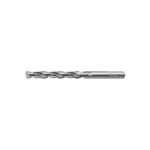


PVD and CVD are the two main coating processes for carbide cutting tools. Each has distinct strengths.
Process Differences
CVD (Chemical Vapor Deposition)
- Process temperature: 1000°C+
- Coating thickness: 8-15 µm
- Adhesion: excellent (chemical bonding)
- Coverage: uniform
PVD (Physical Vapor Deposition)
- Process temperature: 300-500°C
- Coating thickness: 2-5 µm
- Adhesion: good (mechanical interlocking)
- Coverage: line-of-sight
Mechanical Properties
| Property | CVD | PVD |
|---|---|---|
| Edge sharpness preserved | No (thick blunts) | Yes |
| Edge stress state | Tensile (weaker) | Compressive (stronger) |
| Heat resistance | Excellent | Good |
| Wear resistance | Excellent (thicker) | Good |
| Toughness | Lower | Higher |
Use CVD When
- Continuous turning of steel or cast iron
- High cutting speeds (200+ m/min)
- Long cutting edge engagement
- Maximum tool life is priority
Use PVD When
- Milling (especially with interruptions)
- Threading and grooving (need sharp edge)
- Stainless steel and superalloys
- Difficult materials prone to chipping
- Tight surface finish required
Real-World Examples
| Tool | Coating |
|---|---|
| Sandvik GC4325 (steel) | CVD multilayer |
| Sandvik GC2220 (stainless) | PVD AlTiN |
| Iscar IC908 (stainless/superalloy) | PVD AlTiN |
| Walter WSM30 (stainless) | PVD AlTiN (Tiger-Tec Gold) |
| Walter WPP20 (steel) | CVD multilayer (Tiger-Tec Silver) |
See also coated vs uncoated guide.
Shop Related Products at HOOGUU

