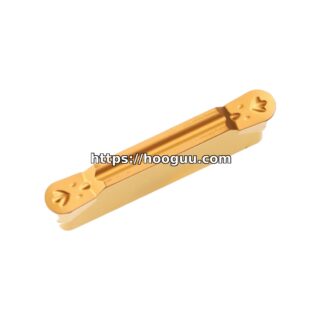
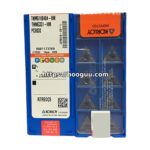
When machinists talk about a versatile 90-degree square-shoulder milling system that can handle everything from face milling and shoulder milling to slotting and contouring, the name that comes up most often is the Sandvik CoroMill 390. In production this family of indexable milling cutters is treated as a “default” platform because it combines a high number of cutting edges, a rigid insert pocket and a broad grade/geometry lineup that lets one cutter body run across ISO P, M, K and N workpiece groups. This article explains exactly what makes the CoroMill 390 platform work, how its inserts and grades are organized, which cutting parameters (Vc, fz, ap, ae) to start from, and how it compares to competing square-shoulder cutters from Iscar, Walter and Korloy.
1. What the CoroMill 390 Platform Is
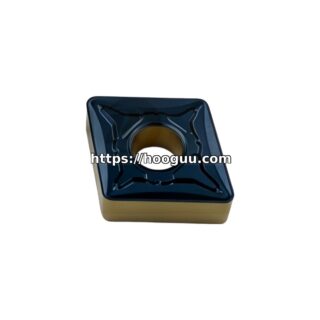
The CoroMill 390 is a 90-degree entering-angle milling system that uses square inserts with four usable cutting edges. The “390” refers to the platform, while individual cutter bodies and inserts carry additional suffixes that describe the insert size, pitch and mounting. The most common insert is the R390-11 T3 xx designation, where “11” is the inscribed circle size in millimetres (iC 11 mm) and “T3” indicates the insert thickness and edge geometry code. A larger variant, the R390-17 T3, uses 17 mm inscribed circle inserts for heavier roughing.
The key mechanical advantages of the platform are:
- Four indexing edges per insert, lowering the cost per edge compared with triangular or 2-edge rhombic inserts.
- Positive axial rake with a 90-degree shoulder, producing low cutting forces and a true square wall without a secondary finishing pass.
- Dovetail insert seating that resists the insert being pulled out of the pocket during climb milling of sticky materials such as austenitic stainless steel.
- Fine-pitch and normal-pitch bodies so the same insert can run on a high-tooth-count cutter for light finishing or a coarse-pitch body for heavy roughing.
- Wiper insert option that delivers Ra 0.8 surface finish at elevated table feeds without a dedicated finishing tool.
2. Insert Range and Geometries
For an operator the first decision is insert size, then geometry. The table below maps the common R390 insert families to their intended application. All of these fit the standard CoroMill 390 cutter bodies.
| Insert designation | iC / thickness | Max ap (mm) | Primary use | Workpiece group |
|---|---|---|---|---|
| R390-11 T3 04M | 11 mm / 3.18 mm | 5 | Finishing, thin walls, small ae | P, M, K, N |
| R390-11 T3 08M | 11 mm / 3.18 mm | 8 | General shoulder/face milling | P, M, K |
| R390-11 T3 08E | 11 mm / 3.18 mm | 8 | Light roughing, sharper edge | M, N, S |
| R390-11 T3 12M | 11 mm / 3.18 mm | 12 | Heavy roughing, high feed per tooth | P, K |
| R390-17 T3 08M | 17 mm / 4.76 mm | 12 | Heavy roughing on large cutters | P, K |
| R390-17 T3 12M | 17 mm / 4.76 mm | 17 | Maximum depth, high power machines | P, K |
The geometry suffix letter (M, E, K) describes the edge preparation. M is the general-purpose medium hone (0.02-0.05 mm), E has a sharper honed edge for sticky and work-hardening materials, and K carries a stronger T-land for interrupted cuts and hard steel. Selecting the wrong geometry is the most common cause of premature insert failure on this platform: a sharp E geometry chipping on interrupted steel, or a strong K geometry building up a BUE on 304 stainless.
3. Grade Portfolio and Coating Technology
The CoroMill 390 is sold across Sandvik’s full grade range, but five grades cover roughly 90% of production use. These combine a cemented-carbide substrate with either a PVD (Physical Vapor Deposition) or CVD (Chemical Vapor Deposition) coating. For milling, PVD grades are generally preferred because they deliver a sharper, tougher edge and resist thermal cracking better than thick CVD coatings.
| Grade | Coating | ISO use | Hardness / toughness | Target workpiece |
|---|---|---|---|---|
| GC1025 | PVD TiAlN | P10-P25, M20-M30 | High hardness, medium toughness | Carbon/alloy steel, soft stainless at high Vc |
| GC2025 | PVD TiAlN | P25-P40, M30-M40 | Balanced | General steel & stainless, interrupted cuts |
| GC3040 | PVD TiN/TiCN | P40-P50, M40-M50, K30-K40 | High toughness | Heavy roughing, scale, interrupted cast iron |
| GC4240 | CVD TiCN/Al2O3/TiN | K10-K25, P25-P35 | High abrasion resistance | Cast iron (gray & ductile) at high Vc |
| H13A | Uncoated | N10-N20, K10-K20 | Ultra-fine grain, sharp | Aluminum, copper, non-ferrous, plastics |
A useful rule for the CoroMill 390 is: start with GC2025 for anything steel or stainless, switch to GC1025 when the cut is stable and you want to push Vc above 200 m/min, and switch to GC3040 the moment you see chipping from interruption or scale. For aluminum, use the uncoated H13A grade with polished flutes — a coated insert will generate built-up edge and spoil the surface finish.
4. Cutting Parameters by Workpiece Material
The following starting parameters are for a R390-11 T3 08M / R390-11 T3 08E insert on a 50 mm diameter CoroMill 390 cutter (z = 4 normal pitch), run dry or with emulsion flood coolant. They are starting values; always ramp Vc upward in 10% steps while monitoring flank wear, and reduce fz if chatter marks appear.
| Material | ISO | Grade | Vc (m/min) | fz (mm/tooth) | ap (mm) | ae (mm) |
|---|---|---|---|---|---|---|
| C45 carbon steel (~180 HB) | P25 | GC1025 | 220-280 | 0.08-0.18 | 0.5-6 | 20-40 |
| 42CrMo4 alloy steel (~220 HB) | P30 | GC2025 | 180-240 | 0.06-0.15 | 1-8 | 20-40 |
| Hardened steel 42-48 HRC | P45 | GC3040 | 100-140 | 0.04-0.08 | 0.3-3 | 15-30 |
| AISI 304 / 316 stainless | M35 | GC2025 (E geometry) | 120-180 | 0.05-0.12 | 1-6 | 20-40 |
| Duplex 2205 | M40 | GC2025 (E) | 100-150 | 0.04-0.10 | 1-5 | 20-35 |
| Gray cast iron GG25 | K25 | GC4240 | 200-300 | 0.08-0.20 | 1-8 | 25-45 |
| Ductile iron GGG50 | K35 | GC3040 | 150-220 | 0.06-0.15 | 1-6 | 25-40 |
| Aluminum 6061-T6 | N20 | H13A (E) | 600-1200 | 0.08-0.25 | 0.5-8 | 25-45 |
A few practical notes on these numbers:
- For a 17 mm insert (R390-17) on a 63-80 mm cutter, reduce fz by about 15% but keep Vc in the same range; the larger corner radius and stronger edge tolerate higher ap.
- When ae < 0.25 × Dc (milling a narrow shoulder or thin wall), switch to the E geometry and raise fz by 10-20% because the chip thickness is thinned by the small radial engagement.
- For climb milling use the values as shown; for conventional (up) milling reduce fz by 30% to avoid work-hardening on stainless and titanium.
- Always apply the wiper insert (R390-11 W insert) when ae is a full cutter width or greater; it allows fz to be doubled while holding Ra 0.8-1.6 m.
5. Competitive Benchmark: CoroMill 390 vs. Iscar, Walter and Korloy
How does the CoroMill 390 compare to the competing square-shoulder platforms commonly found on the shop floor? The table below is based on the same 50 mm cutter class and 11 mm insert family. Values are typical published catalog ranges and will vary by exact body/insert combination.
| Platform | Insert edges | Entering angle | Max ap (mm) | Steel Vc (m/min) | Stainless Vc (m/min) | Notable strength |
|---|---|---|---|---|---|---|
| Sandvik CoroMill 390 | 4 | 90° | 8 (iC11) | 180-280 | 120-180 | Broadest grade range, wiper option, rigid dovetail seat |
| Iscar Helido 490 | 4 | 90° | 8 | 170-270 | 115-170 | High-feed geometries, good chip evacuation |
| Walter F4033 | 4 | 90° | 9 | 160-260 | 110-165 | Tiger-tec Silver grades, strong edge for interruption |
| Korloy AOMT / KFM | 4 | 90° | 8 | 150-240 | 100-150 | Cost-effective alternative, solid PC6510 grade |
The CoroMill 390 wins on grade breadth and insert availability. In alloy steel at 250 m/min a GC1025 insert typically delivers 25-35 minutes of tool life against 18-28 minutes for a comparable Korloy PC6510, although the Korloy insert costs noticeably less. In duplex stainless the Iscar Helido with its S845 SNHU geometry can edge ahead on chip control, while the Walter F4033 is favored where the cut is heavily interrupted and the premium Tiger-tec Silver WSP45S grade is justified.
6. Application and Setup Best Practices
Even the best insert underperforms if the setup is wrong. Follow these rules to get the catalog-level performance out of a CoroMill 390:
- Cutter overhang: keep the tool projection below 4× the shank diameter for steel and below 3× for stainless. Chatter is the number one cause of poor finish and short tool life on 90-degree shoulder mills.
- Insert indexing torque: torque the clamping screw to 22 N·m for iC11 inserts and 35 N·m for iC17. A loose insert moves in the pocket, fractures the cutting edge, and can damage the cutter body seat.
- Coolant: for stainless and titanium use high-pressure through-coolant (≥ 70 bar) directed at the cutting edge. For steel below 220 m/min flood emulsion is sufficient; above 220 m/min consider MQL or dry running with a heat-resistant PVD grade.
- Entry and exit: program a ramped or circular entry into the cut rather than a straight plunge. A 90-degree cutter that plunges directly into solid material loads all teeth simultaneously and causes edge chipping.
- Workpiece clamping: the sharp E geometry on stainless needs a rigid fixture. If the part deflects, the insert rubs instead of cuts, work-hardening the surface and shortening tool life by 50% or more.
7. Which Insert to Pick First
If you are setting up a CoroMill 390 for the first time and want a single starting point, the recommended defaults are:
- Steel (C45 to 42CrMo): R390-11 T3 08M-GC1025 at Vc 240, fz 0.12, ap 4, ae 30.
- Stainless (304/316): R390-11 T3 08E-GC2025 at Vc 150, fz 0.08, ap 4, ae 30, with through-coolant.
- Cast iron (GG25): R390-11 T3 08M-GC4240 at Vc 250, fz 0.15, ap 5, ae 40, dry.
- Aluminum (6061): R390-11 T3 08E-H13A at Vc 800, fz 0.18, ap 5, ae 40, with air blast.
From these starting points optimize in small steps: increase Vc by 10% and record flank wear at 15 minutes; increase fz until surface roughness or chatter becomes unacceptable; increase ap only if the machine spindle power and fixture rigidity allow it.
Conclusion
The Sandvik CoroMill 390 remains the reference 90-degree square-shoulder milling platform because it does not force a compromise between edge count, shoulder quality and material versatility. Four indexing edges, a positive cutting geometry, a wide grade range from GC1025 to GC4240, and a wiper-insert option mean a single cutter body can cover roughing and finishing across steel, stainless steel, cast iron and aluminum. Its main competitors — the Iscar Helido 490, Walter F4033 and Korloy AOMT — are each strong in narrow niches (chip control, interrupted cuts, cost), but none matches the CoroMill 390’s breadth of catalog support and insert availability. Match the insert geometry to the workpiece group, hold the setup rigid, and start from the Vc/fz/ap values in the tables above, and the platform will deliver predictable, repeatable performance in everyday production.
Shop Related Products at HOOGUU