

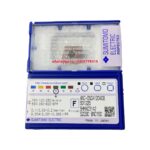
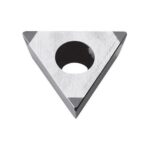
Mitsubishi vs Sumitomo Carbide Grades for Stainless Steel Turning Compared: Coating Technology, Substrate Properties, and Application Parameters
Stainless steel turning remains one of the most demanding applications in modern machining. With ISO M-group materials exhibiting high work-hardening rates, poor thermal conductivity, and a propensity to produce built-up edge (BUE), selecting the correct carbide grade directly determines productivity, tool life, and surface integrity. Two of the most respected names in carbide insert technology—Mitsubishi …
Tungaloy vs ZCC.CT Steel Turning Inserts Compared: Grade Technology, Cutting Parameters, and Application Performance
Introduction Steel turning remains the backbone of CNC machining, and selecting the right insert grade can mean the difference between profitable production and costly downtime. Two manufacturers that consistently rank among the top choices for steel turning applications are Tungaloy and ZCC.CT. While Tungaloy brings Japanese precision engineering heritage as an IMC Group member, ZCC.CT …
ISO P/M/K/N/S/H Carbide Grade Parameters Explained: Kyocera, TaeguTec, and Mitsubishi Complete Reference Guide
Introduction to ISO Carbide Grade Classification Selecting the correct carbide grade is one of the most critical decisions in machining. The ISO (International Organization for Standardization) classification system provides a universal framework for categorizing cemented carbide cutting tools based on the workpiece material they are designed to machine. Understanding the six main ISO application classes—P, …
Aluminum High-Speed Milling Tool Selection Guide: Sandvik vs Iscar Grade Recommendations for Aerospace Applications
Introduction: Why Aluminum High-Speed Milling Demands Specialized Tooling High-speed milling (HSM) of aluminum alloys, particularly aerospace-grade 6061-T6, 7075-T6, and 2024-T3, presents unique machining challenges that set it apart from steel or cast iron machining. With cutting speeds often exceeding 2,000 m/min and spindle speeds climbing above 20,000 RPM, tool selection becomes a critical factor in …
Stainless Steel Threading Best Practices: Vargus, OSG, and Yamawa Tool Selection, Cutting Parameters, and Process Optimization
Introduction: The Challenge of Threading Stainless Steel Stainless steel remains one of the most difficult materials to thread efficiently in modern machining operations. Grades such as AISI 304 and 316 exhibit high work-hardening rates, poor thermal conductivity, and a tendency to form built-up edge (BUE) on cutting edges. These material properties place extraordinary demands on …
Walter Xtra·tec XT Milling Grades Explained: Substrate Technology, Coatings, and Application Parameters
The Walter Xtra·tec XT milling system represents one of the most widely adopted platforms for indexable milling in general engineering, mold and die production, and aerospace component manufacturing. At the core of this system’s performance lies a structured portfolio of carbide grades, each engineered for specific workpiece materials and machining conditions. This article provides a …
Korloy vs Sumitomo CBN Turning Inserts for Hardened Steel Compared: Grade Technology, Cutting Parameters, and Hard Turning Best Practices
Hard turning of hardened steels in the 45–65 HRC range has become a viable alternative to cylindrical grinding for many precision components. At the center of this process evolution are cubic boron nitride (CBN) turning inserts, which combine extreme hardness with thermal stability far beyond conventional carbide. This article delivers a technical comparison between Korloy …
Korloy vs Sumitomo CBN Turning Inserts for Hardened Steel Compared: Grade Technology, Cutting Parameters, and Hard Turning Best Practices
Hard turning of hardened steels in the 45–65 HRC range has become a viable alternative to cylindrical grinding for many precision components. At the center of this process evolution are cubic boron nitride (CBN) turning inserts, which combine extreme hardness with thermal stability far beyond conventional carbide. This article delivers a technical comparison between Korloy …
Mitsubishi vs Kyocera High-Feed Milling Inserts Compared: Grade Technology, Cutting Parameters, and Die & Mold Application Performance
Introduction: Why High-Feed Milling Matters in Die & Mold Manufacturing High-feed milling (HFM) has become a cornerstone technology in modern die and mold manufacturing, enabling shops to dramatically reduce roughing cycle times while extending tool life. The principle is straightforward: by combining shallow depths of cut (ap) with elevated feed rates (fz) and optimized insert …
Aerospace Aluminum High-Speed Milling Tool Selection Guide: Sandvik, Iscar, and ZCC.CT Grades Compared
Introduction High-speed milling (HSM) of aluminum alloys — particularly aerospace-grade 7075-T6, 6061-T6, and 2024-T3 — demands careful tool selection to balance productivity, surface finish, and tool life. With cutting speeds often exceeding 2000 m/min and feed rates surpassing 5 m/min, even small differences in insert geometry, grade, and coating can dramatically impact machining economics and …