

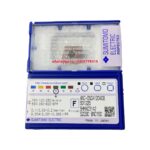
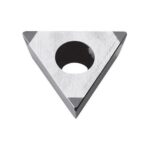
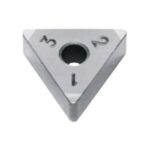
Walter AG’s Tiger·tec platform represents one of the most recognizable advancements in modern CVD and PVD coating technology for indexable turning inserts. First introduced in the early 2000s and continuously refined through multiple generations, Tiger·tec grades have become a benchmark for machinists working with steel, stainless steel, cast iron, and high-temperature alloys. This article provides a comprehensive technical breakdown of the Tiger·tec Gold (CVD) and Tiger·tec Silver (PVD) product families, explains the underlying coating architecture, and presents actionable cutting parameter recommendations based on ISO material group classifications.
What Is Tiger·tec Technology?
Tiger·tec is Walter’s proprietary multi-layer coating technology applied to cemented carbide substrates. The name encompasses two distinct families:
- Tiger·tec Gold — Chemical Vapor Deposition (CVD) coatings, recognizable by their gold-colored top layer. These grades are optimized for high productivity and stability in continuous to lightly interrupted cuts.
- Tiger·tec Silver — Physical Vapor Deposition (PVD) coatings with a silver-colored appearance. These grades prioritize edge toughness, low cutting forces, and performance in interrupted cuts or unstable machining conditions.
The visual distinction is not merely cosmetic. The gold coloration comes from a top-layer TiN coating in the CVD stack, while the silver hue results from PVD-specific layer compositions such as TiAlN and AlTiN. Each family serves different thermal and mechanical demands during the cutting process.
Tiger·tec Gold CVD Grades: Layer Architecture
Tiger·tec Gold grades utilize a multi-layer CVD coating system typically comprising:
- TiN top layer — Provides wear indication and reduces built-up edge formation.
- Al₂O₃ intermediate layer — Offers thermal insulation and crater wear resistance at high cutting temperatures.
- TiCN base layer — Ensures strong adhesion to the carbide substrate and provides flank wear resistance.
Walter employs a post-coating treatment to reduce tensile stresses in the CVD film, which would otherwise promote micro-chipping and premature insert failure. This treatment smooths the coating surface and improves edge stability, particularly on medium to large corner radii.
Key Gold Grades and Applications
| Grade | Substrate | Coating | ISO Application | Primary Use Case |
|---|---|---|---|---|
| WPP10S | Hard substrate | CVD multi-layer | P10–P25 | Steel finishing to medium machining |
| WPP20S | Universal substrate | CVD multi-layer | P20–P35 | General steel machining, mixed production |
| WPP30S | Tough substrate | CVD multi-layer | P30–P40 | Roughing, heavy interrupted cuts in steel |
| WKP10S | Hard substrate | CVD multi-layer | K10–K20 | Cast iron finishing, high-speed machining |
| WKP20S | Universal substrate | CVD multi-layer | K15–K30 | General cast iron machining |
| WTP20S | Universal substrate | CVD multi-layer | M20–M30, S20–S30 | Stainless steel and HTSA medium machining |
Tiger·tec Silver PVD Grades: Layer Architecture
Tiger·tec Silver employs PVD arc-evaporation technology to deposit nanostructured coatings at lower temperatures than CVD. This preserves the substrate’s toughness and produces compressive residual stresses that enhance edge integrity. The typical layer stack includes:
- AlTiN or TiAlN functional layer — High hardness and oxidation resistance up to approximately 900°C.
- TiN or CrN bond layer — Improves adhesion to the carbide and provides a smooth coating interface.
The lower deposition temperature of PVD (compared to CVD) prevents cobalt depletion in the substrate surface zone, maintaining transverse rupture strength and resistance to micro-fracture. Silver grades are therefore preferred in applications involving interrupted cuts, slender workpieces, or where low cutting forces are essential to minimize deflection.
Key Silver Grades and Applications
| Grade | Substrate | Coating | ISO Application | Primary Use Case |
|---|---|---|---|---|
| WKP10G | Ultra-fine grain | PVD AlTiN | K10–K20 | Hard cast iron, high-speed finishing |
| WPP10G | Fine grain | PVD AlTiN | P10–P25 | Steel finishing, good surface finish requirements |
| WPP20G | Universal | PVD TiAlN | P20–P30 | General steel, mixed interrupted and continuous |
| WSM10G | Fine grain | PVD AlTiN | M10–M20, S10–S20 | Stainless steel finishing, superalloy finishing |
| WSM20G | Tough substrate | PVD TiAlN | M20–M30, S20–S30 | Stainless steel medium machining, unstable conditions |
| WSM30G | Very tough substrate | PVD TiAlN | M30–S30 | Roughing in stainless steel and HTSA |
Gold vs Silver: Technical Comparison
| Property | Tiger·tec Gold (CVD) | Tiger·tec Silver (PVD) |
|---|---|---|
| Coating thickness | 8–14 μm | 2–6 μm |
| Deposition temperature | ~1000°C | ~450–500°C |
| Hardness (HV) | 2800–3200 | 3200–3600 |
| Oxidation resistance limit | ~1000°C | ~850–900°C |
| Edge toughness | Moderate | High |
| Recommended cutting mode | Continuous to light interruption | Interrupted, unstable, slender parts |
| Cutting force level | Standard | Lower |
| Surface finish capability | Good to very good | Very good to excellent |
Recommended Cutting Parameters
The following parameter ranges represent starting values for external longitudinal turning with Walter negative basic-shape inserts (CNMG / WNMG) under stable conditions using emulsion coolant or minimum quantity lubrication (MQL). Adjustments should be made based on machine rigidity, overhang, and workpiece clamping.
Steel Machining (ISO P)
| Grade | Vc (m/min) | fn (mm/rev) | ap (mm) | Application |
|---|---|---|---|---|
| WPP10S | 250–400 | 0.10–0.25 | 0.5–3.0 | Finishing, continuous |
| WPP20S | 180–300 | 0.15–0.35 | 1.0–5.0 | Medium machining |
| WPP30S | 120–220 | 0.20–0.50 | 2.0–8.0 | Roughing, interrupted |
| WPP10G | 200–350 | 0.08–0.20 | 0.3–2.5 | Finishing, thin-walled parts |
| WPP20G | 150–280 | 0.12–0.30 | 1.0–4.0 | Medium, mixed conditions |
Stainless Steel and HTSA (ISO M / S)
| Grade | Vc (m/min) | fn (mm/rev) | ap (mm) | Application |
|---|---|---|---|---|
| WTP20S | 120–200 | 0.12–0.30 | 1.0–5.0 | General stainless steel |
| WSM10G | 100–180 | 0.08–0.20 | 0.5–3.0 | Finishing, superalloys |
| WSM20G | 80–150 | 0.10–0.28 | 1.0–4.0 | Medium, unstable conditions |
| WSM30G | 60–120 | 0.15–0.40 | 2.0–8.0 | Roughing, heavy interruption |
Cast Iron (ISO K)
| Grade | Vc (m/min) | fn (mm/rev) | ap (mm) | Application |
|---|---|---|---|---|
| WKP10S | 300–450 | 0.10–0.25 | 0.5–3.0 | Gray iron finishing |
| WKP20S | 200–350 | 0.15–0.35 | 1.0–5.0 | Gray and ductile iron general |
| WKP10G | 250–400 | 0.08–0.20 | 0.3–2.5 | Hard cast iron, vermicular iron |
Practical Selection Guidelines
Selecting between Tiger·tec Gold and Silver depends on more than just the workpiece material. Consider the following decision criteria:
- Use Gold when machining is continuous or lightly interrupted, machine tool is rigid, and the priority is metal removal rate or tool life in stable conditions. CVD’s thicker coating and superior thermal barrier allow higher cutting speeds in these scenarios.
- Use Silver when cuts are interrupted, workpiece geometry is slender or thin-walled, surface finish is critical, or when built-up edge is a recurring problem. PVD’s lower friction coefficient and compressive stress state reduce cutting forces and improve edge stability.
- For mixed production, Silver grades often provide more predictable performance across varying conditions because they tolerate instability better than CVD grades.
Wear Patterns and Troubleshooting
Understanding typical wear modes helps optimize grade selection:
- Crater wear — Dominant in high-speed steel machining. Gold grades with thick Al₂O₃ layers resist this best.
- Flank wear — Normal progression in continuous cuts. Monitor VBmax = 0.3 mm for roughing, 0.15 mm for finishing.
- Notch wear — Common at the depth-of-cut line in oxidizing materials like stainless steel. Silver grades with sharp cutting edges and low cutting forces mitigate notch formation.
- Plastic deformation — Occurs at excessive speeds or feed rates in heat-resistant alloys. Reduce Vc by 15–20% or switch to a harder substrate grade.
Conclusion
Walter’s Tiger·tec Gold and Silver families offer complementary solutions for modern turning operations. Gold CVD grades excel in productivity-focused, stable machining environments where thermal load management and thick-coating wear resistance are paramount. Silver PVD grades deliver superior toughness, lower cutting forces, and better performance in interrupted or unstable conditions. By matching the correct Tiger·tec generation to the specific material group and cutting scenario, machinists can achieve measurable improvements in tool life, surface quality, and process reliability.
Shop Related Products at HOOGUU